
Supporting movement.
Enhancing independence.
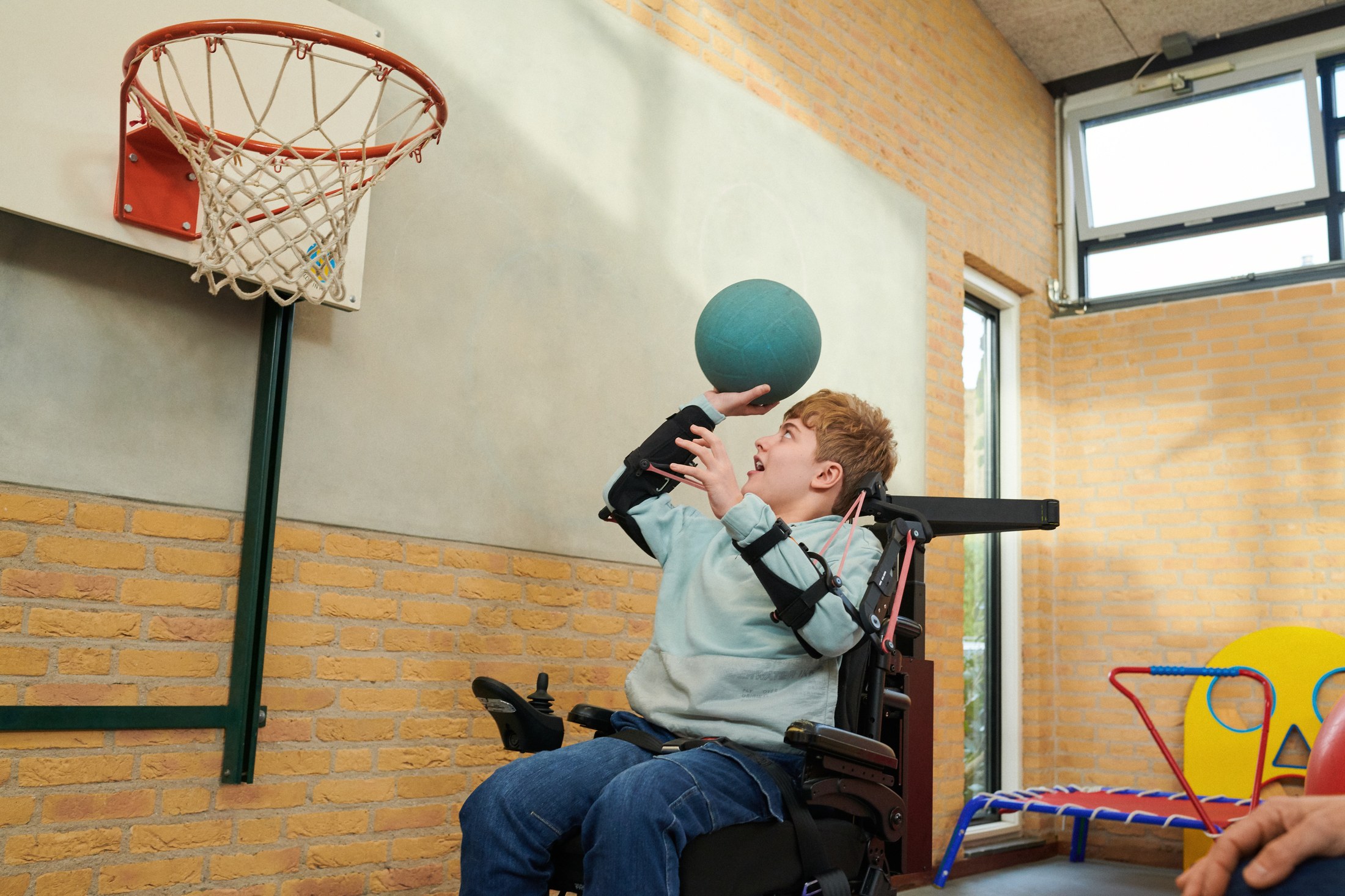
The Yumen EX-one is an arm support based on exoskeleton technology that supports arm function in people with muscular diseases, making daily activities possible again.
Super Yumens — sign up for the newsletter and stay in the loop. Sign up →
Why the EX-one
Losing arm function is more than a physical limitation
Losing arm strength to a muscular disease also means losing pieces of daily life: eating unaided, holding someone's hand, working at a computer. The EX-one supports you exactly where muscle strength falls short, making those activities possible again — without needing extra strength.
More independence
Keep doing daily activities yourself, at your own pace.
Less fatigue
Less effort needed per movement, more energy left for the rest of the day.
More participation
Take part again in work, hobbies and social moments.
How it works
From first conversation to daily use
Sign-up
Measurement
Fitting
Delivery
Training & use
Both arms supported
Always supports both arms at once, for even loading of the trunk muscles.
For every wheelchair
Suitable for both manual and electric wheelchairs — you can still push the wheels yourself.
Fully mechanical
No motors required: the EX-one supports your remaining muscle strength.
Largest Range of Motion
The largest Range of Motion makes the EX-one unique — you can effortlessly reach high, low and far, bringing many more daily activities within reach.
Both arms supported
The EX-one always supports both arms at once, for even loading of the trunk muscles during daily activities.
Suitable for manual, electric and tripod wheelchairs
The EX-one can be mounted on manual wheelchairs, electric wheelchairs and tripod wheelchairs alike. You can still push the wheels on a manual wheelchair.
Transferable between chairs
The EX-one can be removed from one chair and moved to another, as long as that chair has an adapter fitted. That way you're not tied to a single chair.
Fully mechanical
No motors required: the EX-one works using your remaining muscle strength, with no active drive.
Largest Range of Motion
The largest Range of Motion makes the EX-one unique — you can effortlessly reach high, low and far, bringing many more daily activities within reach.
Custom-fitted
During the fitting, the EX-one is adjusted to the user's body, range of motion and support needs.
Comfortable contact through a fabric sleeve
Instead of a hard arm cup, the EX-one uses a soft fabric sleeve as the point of contact with your body. That means more comfort — you can simply rest your arm on a table or armrest, and you keep your sense of touch with your surroundings.

Who it's for
Developed for people with reduced arm function
The EX-one is a device for people with arm muscle weakness. So far it is mainly used by people with Duchenne muscular dystrophy, but the EX-one is suitable for anyone who needs arm support — for example due to FSHD, SMA, Limb Girdle muscular dystrophy or Ehlers-Danlos syndrome.
Check if the EX-one is right for you →Good to know
Not everyone with a muscular disease qualifies for the EX-one. Severe contractures, pain complaints, or significantly limited trunk mobility can be contraindications.
Read more about indications and contraindications →User stories
What the EX-one means in daily life
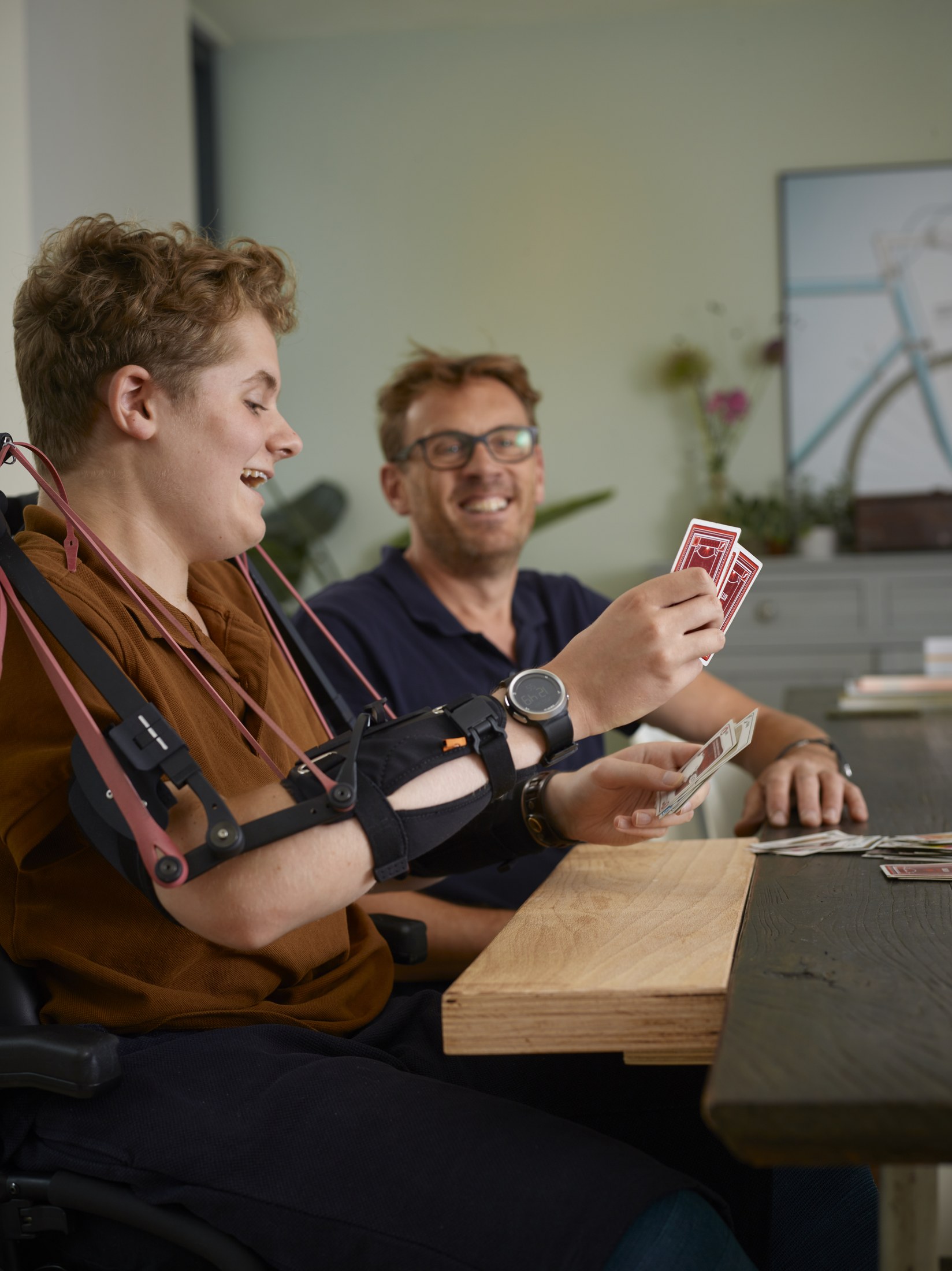
"I can pick up my water bottle and drink from it on my own again. That sounds small, but it changes my whole day."— User, Duchenne
"I can join in games and activities with my little sister again without getting tired quickly. That makes me really happy!"— User, EX-one
For healthcare professionals
Clinically substantiated, in collaboration with rehabilitation centres
The EX-one was developed and tested in collaboration with rehabilitation physicians and occupational therapists. See the clinical indications, evidence and training materials for your practice.
Go to the professionals page →